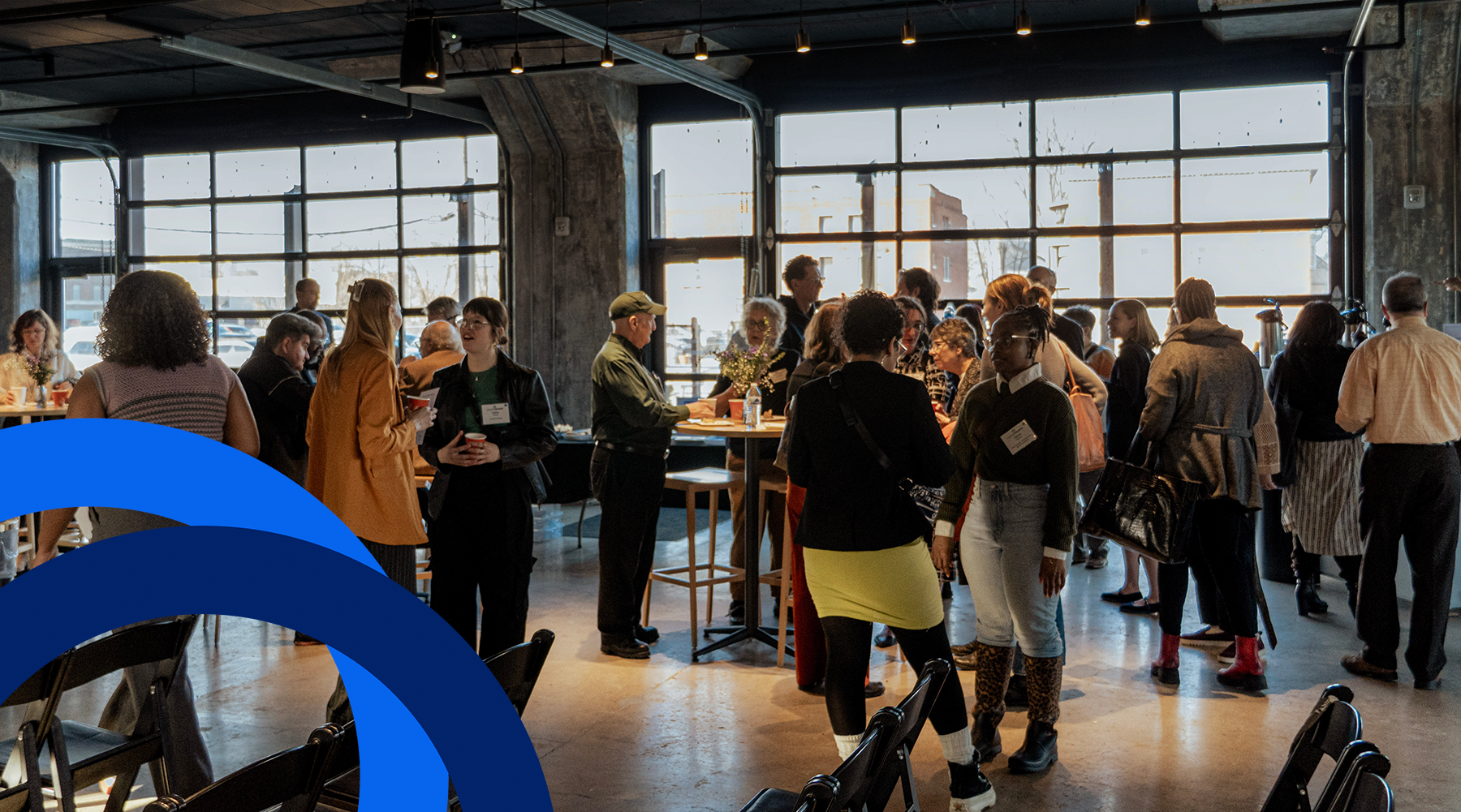
On March 26, members from across Southeast Michigan gathered for CultureSource’s Spring Biannual Member Meeting — a morning of conversation, connection, and programming spanning AI in the arts, youth internships, arts and health, and the strategic direction guiding CultureSource’s work in 2026 and beyond.
CultureSource Updates
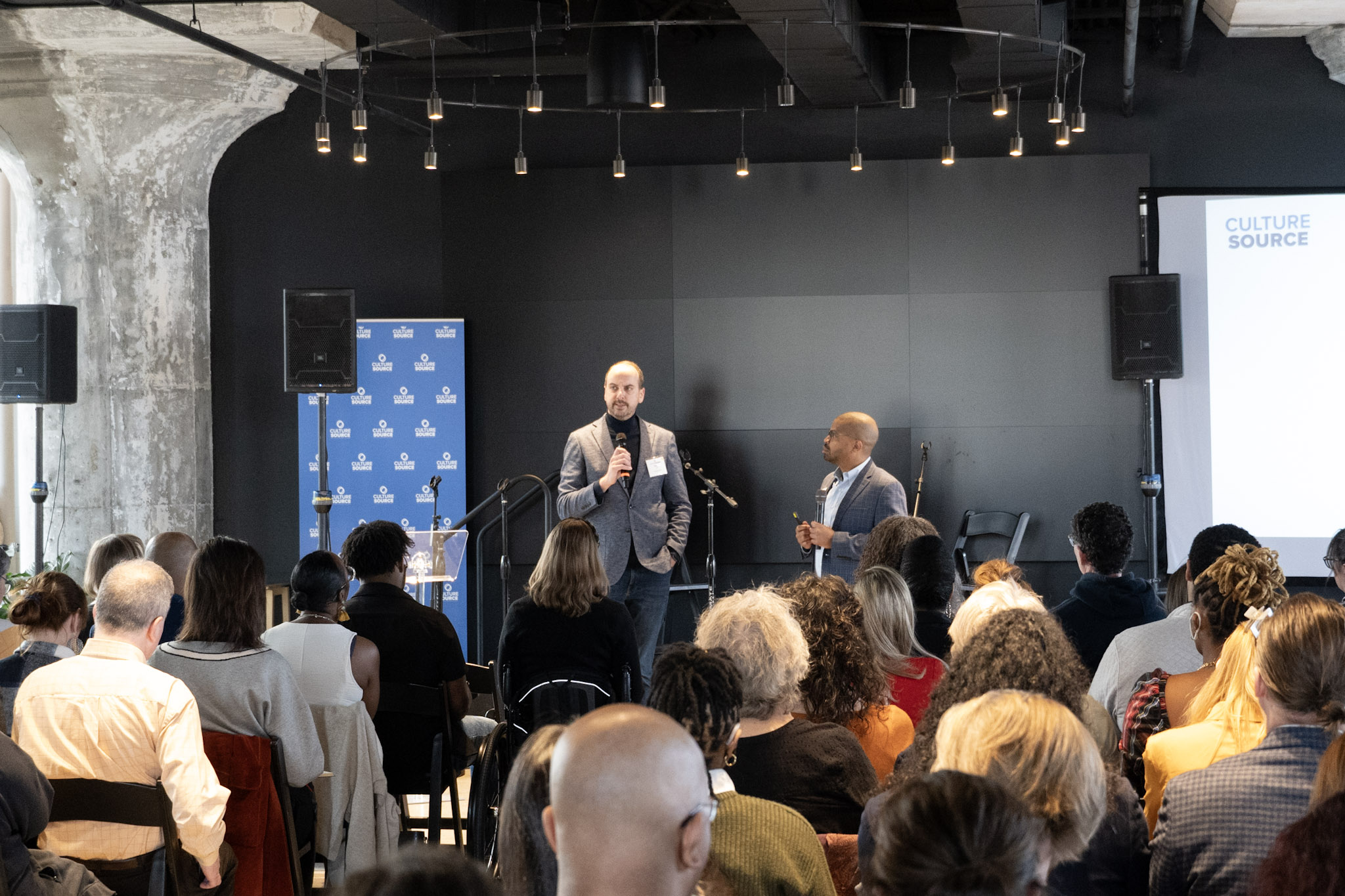
Board chair Brent Ott (COO, The Henry Ford) opened the meeting by placing CultureSource’s work in historical context. In 1996, a group of local arts organizations and funders came together in response to drastic cuts in state arts funding. That informal coalition eventually became CultureSource in 2007, built on the premise that the sector is stronger when it speaks and strategizes together. Thirty years later, Ott said, that premise hasn’t changed, even as the challenges have.
Executive director Omari Rush then walked members through CultureSource’s strategic blueprint — a living framework he first sketched in 2018 and continues to refine through ongoing conversations with partners and members. The blueprint centers on CultureSource’s alliance: nonprofit arts and cultural organizations across Southeast Michigan, alongside individual creatives and fiscally sponsored projects, all working toward the vitality of the sector and the communities it serves.
Four Strategic Themes
Creativity
Building members’ capacity to experiment and innovate, including an upcoming AI seminar and innovation labs with four member organizations.
Visibility
Increasing awareness of arts and culture’s work and impact through new economic research and ongoing state advocacy.
Thrivability
Supporting strong organizations and leaders through the Flourish Fund and the Digital Access for the Arts Program (DAAP).
Goodness
Advancing the broader social impact of the arts through the Bloomberg Arts Internship and the Memory Café Collective.
Arts, Technology, and the Rise of AI
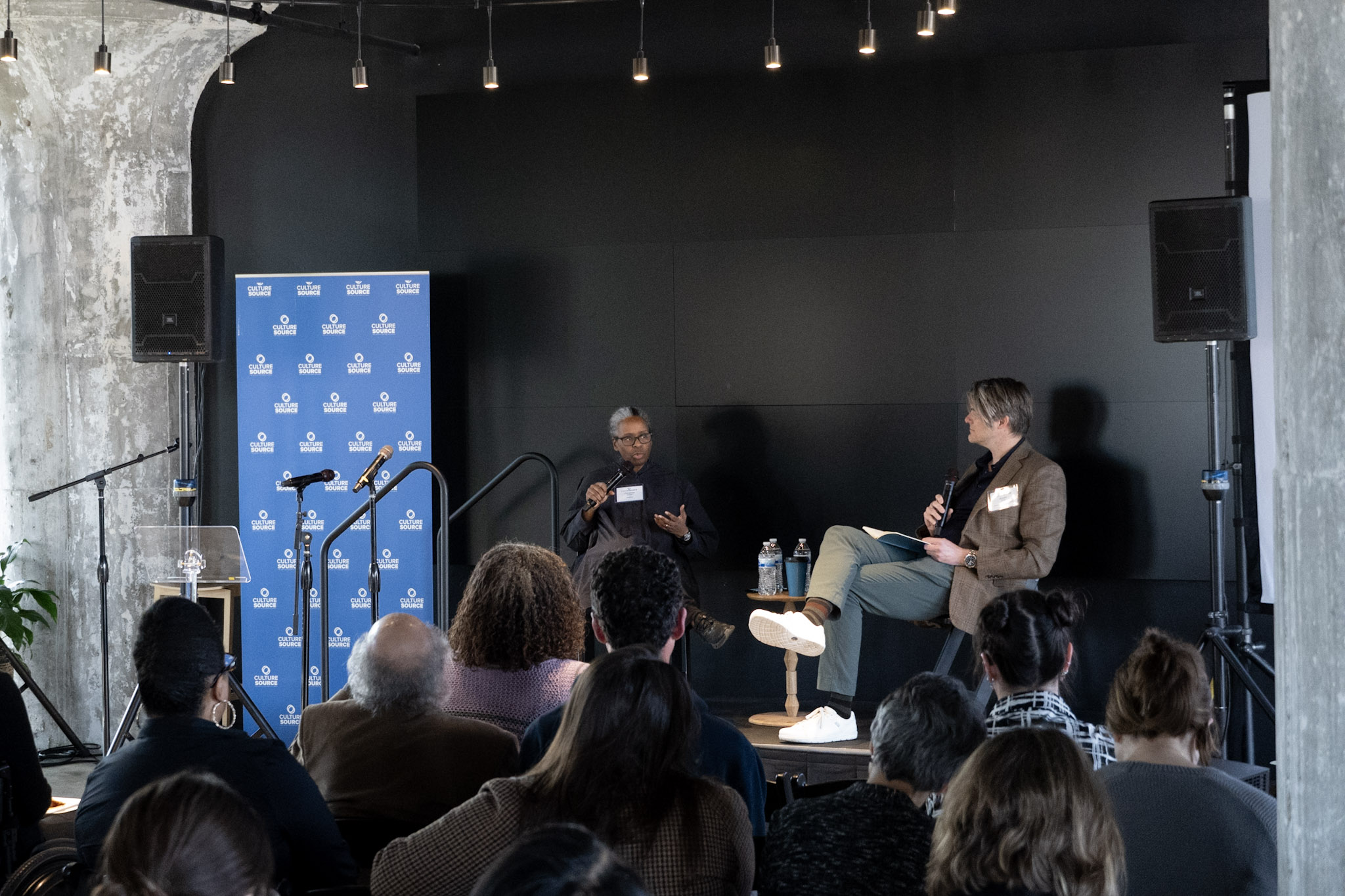
Cezanne Charles (artist, researcher, and co-founder of Detroit studio rootoftwo) and Koven Smith (consultant and former arts program director at Knight Foundation) led a conversation exploring how AI is reshaping creative labor and what arts organizations should be paying attention to now.
Creative ownership and training data
Collective action and labor models
Data trusts and collective IP
Consent in public-facing technology
A practical first step
LINKS from This Session
- CC Signals — Creative Commons AI training preferences
- consentfultech.io — Meaningful technology consent framework
- Allied Media Projects — Digital justice principles
- Design Justice Network — Equitable design practices
- Gray Area Foundation — Art and emerging technology
- Mozilla Common Voice — Open community voice dataset
- Rhizome 7-on-7 — Artist and technologist collaboration
- NEW Inc — Museum-led art and technology incubator
What Technology Challenges Are Members Facing?
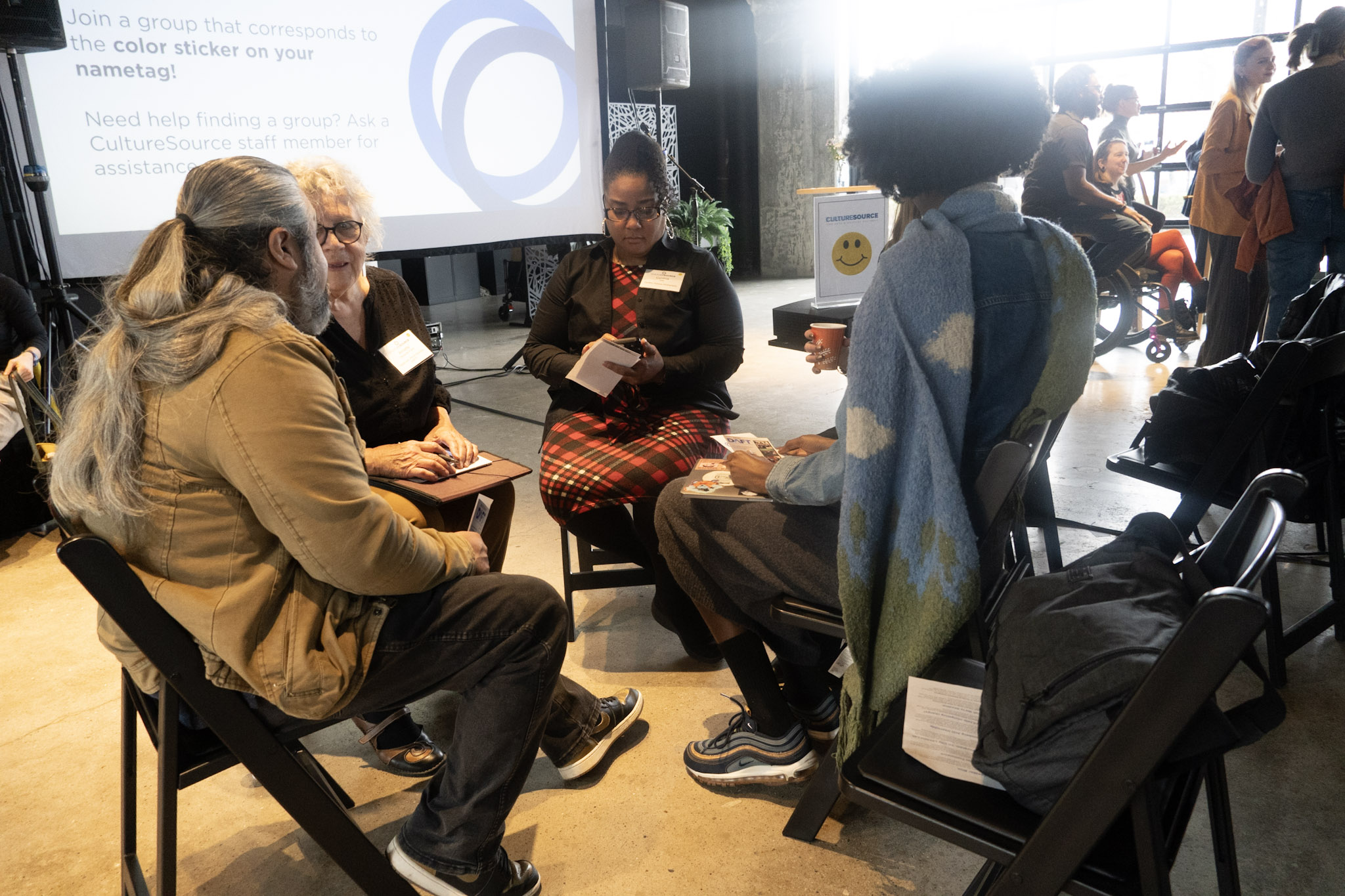
At the meeting, members shared their organization’s technology challenges through a live Mentimeter poll. Answers are clustered around five interconnected themes, click each to read more.
Navigating AI — Responsibly and Strategically
The dominant concern across member responses was AI — not whether to use it, but how. Members described wrestling with questions of ethics, consent, organizational voice, policy, and where human labor ends and automation begins.
“How to positively and ethically use AI to better serve clients.”
“How to preserve our organizational voice while using AI tools.”
“Understanding AI, limits, ethical uses, practicality, privacy… information overload.”
“Currently balancing what to outsource to AI and what to delegate to our team.”
Staff Adoption and Internal Culture Change
Many organizations are experiencing a split: some staff are eager to adopt new tools, others are resistant or uncertain. Inconsistent training, unclear internal policies, and fears around job displacement are slowing progress.
“Getting staff to buy into the concept of AI and actually using it without thinking it will replace their jobs.”
“Not enough training on new technologies for staff who have been there a long time, and a lack of consistent policy or direction.”
Budget Constraints and the Cost of Keeping Up
For smaller organizations especially, the pace and cost of technological change is a persistent strain. Members described struggling to evaluate what to invest in, what to skip, and how to afford the tools that would actually make a difference.
“Really usable tech and applications can be prohibitively expensive. Often our small organizations will look for tech to support us and we cannot justify the extra cost.”
“With a tight budget, it’s tough to determine what to invest in.”
Fragmented Systems and Integration Headaches
A number of members are dealing with the everyday friction of software that doesn’t communicate across platforms — disconnected CRMs, ticketing systems, email lists, and data sets that create operational bottlenecks rather than solving them.
“Making our platforms talk to each other! CRM, ticket sales, email lists, drive/archive storage… They all talk right past each other.”
Digital Presence, Audience Reach, and Basic Infrastructure
For some organizations, the challenge is more foundational: building or updating a web presence, reaching audiences through social media, keeping up with shifting platform algorithms, and in at least one case — simply having reliable wi-fi.
Members noted challenges around social media visibility, patron adaptation to digital communications, and the basics of updating aging technology infrastructure.
Bloomberg Arts Internship
CultureSource program manager Karilú Alarcón Forshee shared an update on the Bloomberg Arts Internship (BAI) as it prepares for its third summer in Detroit.
Three years ago, the program launched with 25 interns across 16 worksites. This summer, it will expand to 40 interns at 22 worksites — nearly doubling its reach since year one. Evaluation partner WolfBrown has documented strong outcomes for participants, including improved college writing skills and increased interest in pursuing careers in arts and culture.
The eight-week paid internship places Detroit high school students at arts and culture organizations across the city. CultureSource partners with member InsideOut Literary Arts to support the program’s writing curriculum. Worksite applications typically open each January — organizations interested in becoming a BAI worksite for summer 2027 are encouraged to connect with the CultureSource programs team.
Culture as Care: Arts and Health
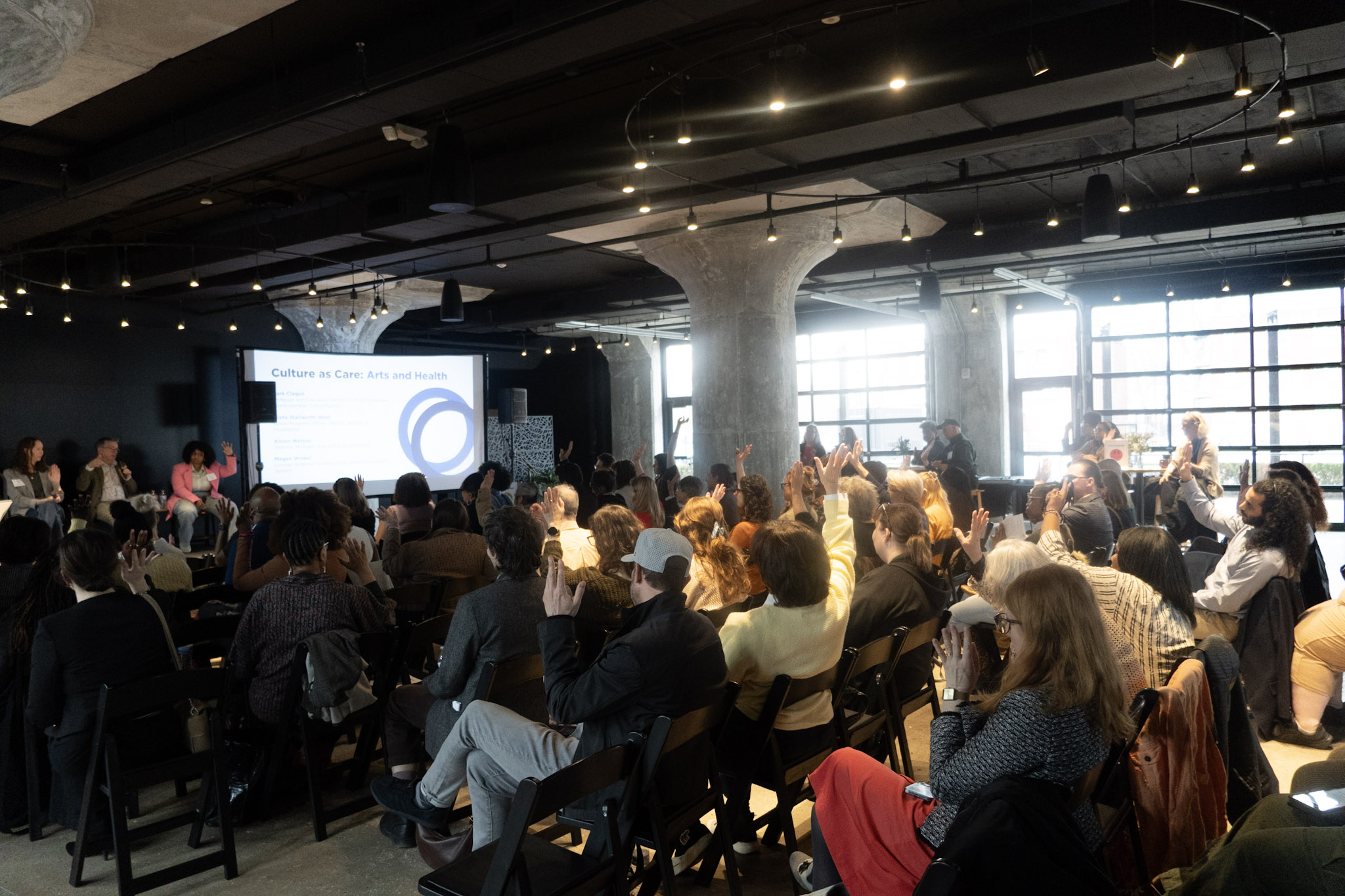
Moderator Alison Watson, director of the Michigan Arts and Culture Council, led a conversation with leaders working at the intersection of arts, health, and community wellbeing.
Panelists included Megan Winkle of Henry Ford Health, Mark Clague of the University of Michigan Arts Initiative, and Misha Stallworth-West of the Ralph C. Wilson, Jr. Foundation. Learn more about the panelists.
Several themes emerged from the discussion.
Arts as a health tool, not a luxury
Research is strengthening the case
Caregivers as an underserved audience
Making the work sustainable
A long-term policy goal
Panelists encouraged organizations interested in this work to start small. Identify existing programs that contribute to wellbeing, connect with health sector partners already in your audience, and begin framing that impact more intentionally.