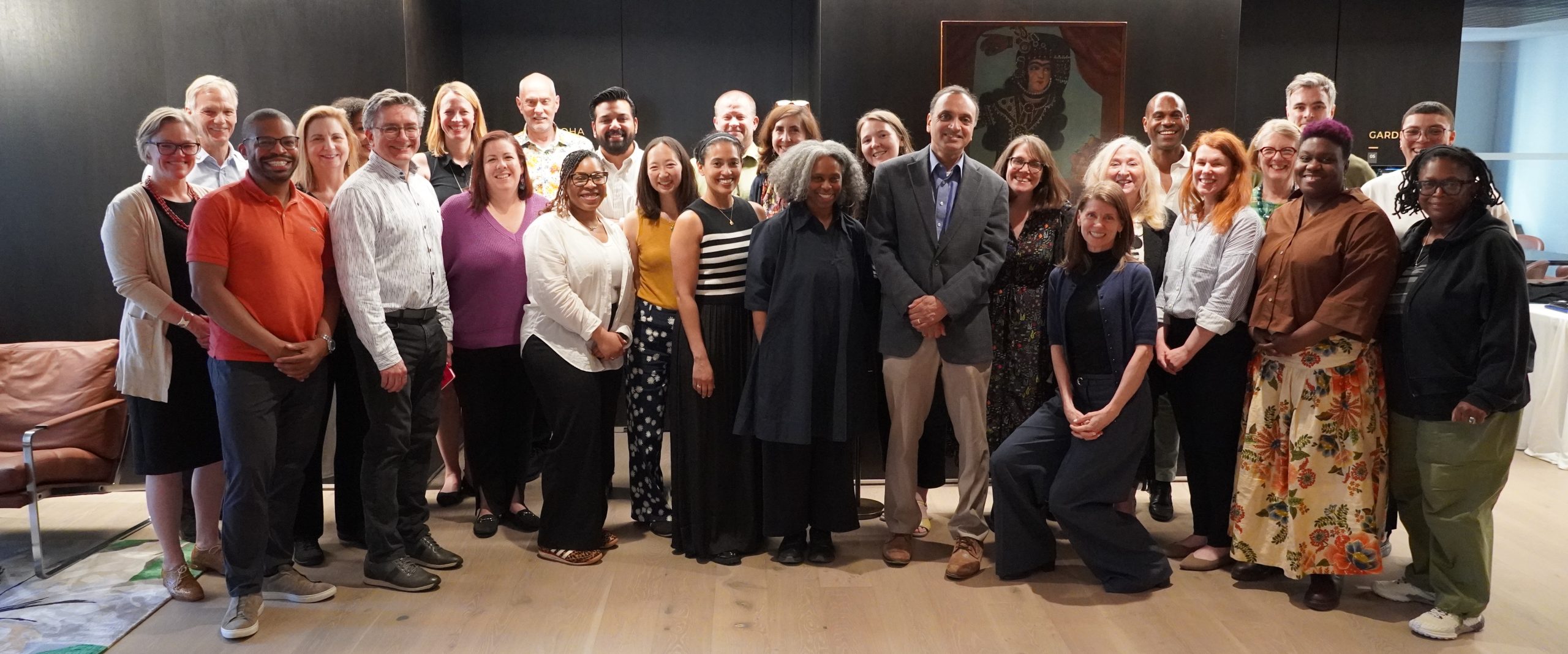
Research Summit 2026 Participants
Also read Omari Rush’s Executive Director Readout of the Research Summit 2026→
Research Summit 2026: Starting at the Foundation
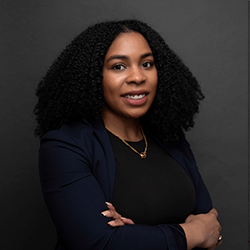
By Leah Counts, Director of Community Impact, Community Foundation for Southeast Michigan
In May, I had the opportunity to join researchers, practitioners, archivists, cultural producers, funders, and arts leaders from across North America at CultureSource’s Research Summit in New York City. The convening, hosted in partnership with the Doris Duke Foundation, is intentionally different from most conferences. There are no presentations to sit through, no deliverables to produce, and no expectation of consensus. Instead, participants gather to explore questions, challenge assumptions, and examine the forces shaping arts and culture.
As the Director of Community Impact at the Community Foundation for Southeast Michigan, I spend much of my time thinking about where philanthropic resources should go and what communities need to thrive. Opportunities like this matter because they allow us to step outside of our day-to-day work and engage with the people researching, testing, imagining, and building what comes next. The conversations do not always produce answers, but they often produce something more valuable: better questions.
One question surfaced repeatedly throughout the summit:
What if we have been spending too much time talking about the house and not enough time talking about the foundation?
Across discussions, participants wrestled with how we define the arts and culture sector itself. We often talk about organizations, programs, audiences, facilities, and funding. These are the visible structures—the house. But beneath them are the less visible systems that shape culture: relationships, shared values, participation, belonging, imagination, and meaning-making.
If those foundational elements are weak, no amount of investment in the visible structure will solve the underlying challenge.
This perspective challenged many of the assumptions that philanthropy, policymakers, and even cultural organizations often make about arts and culture. For decades, the sector has worked to demonstrate its value through economic impact studies, tourism metrics, and workforce contributions. While those measures have their place, many summit participants questioned whether they fully capture why arts and culture matter.
Do we need to justify arts and culture because they drive economic growth? Or do they matter because they are essential to what makes us human?
Arts education helps young people develop creativity, empathy, and critical thinking. Cultural expression helps communities preserve identity and tell their stories. Creative experiences create opportunities for connection, understanding, and belonging. These outcomes are harder to measure than jobs created or dollars generated, but they may be even more important.
The conversations also explored how emerging technologies, particularly artificial intelligence, are forcing the sector to revisit fundamental questions. Much of the public discussion around AI focuses on efficiency and production. The summit conversations focused instead on humanity.
If technology can increasingly create content, what remains uniquely human? What role do artists play in a world where creation becomes easier and more automated? Participants returned repeatedly to ideas of meaning-making, interpretation, imagination, and authenticity. The future value of arts and culture will not be found solely in what we create, but in our ability to help people understand themselves, their communities, and the futures they want to build.
That future-building theme appeared throughout the summit. Participants discussed the importance of imagination not as a luxury, but as a civic capacity. Communities need spaces where people can explore possibilities, ask tough questions, and envision alternatives. Arts and culture have long provided those spaces.
For me, that may have been the most important takeaway.
At a time when communities face technological disruption, demographic shifts, political polarization, and economic uncertainty, the role of arts and culture extends beyond entertainment or enrichment. It helps communities make meaning of change. It creates opportunities for dialogue. It gives people agency to shape what comes next.
The summit reminded me that arts and culture are not separate from community development, education, economic opportunity, or civic life. They are deeply connected to all of them.
As funders, researchers, practitioners, and cultural leaders continue to ask what comes next, perhaps the most important work is not building a new house.
Perhaps it is returning to the foundation and asking what kind of future we want to build together.